

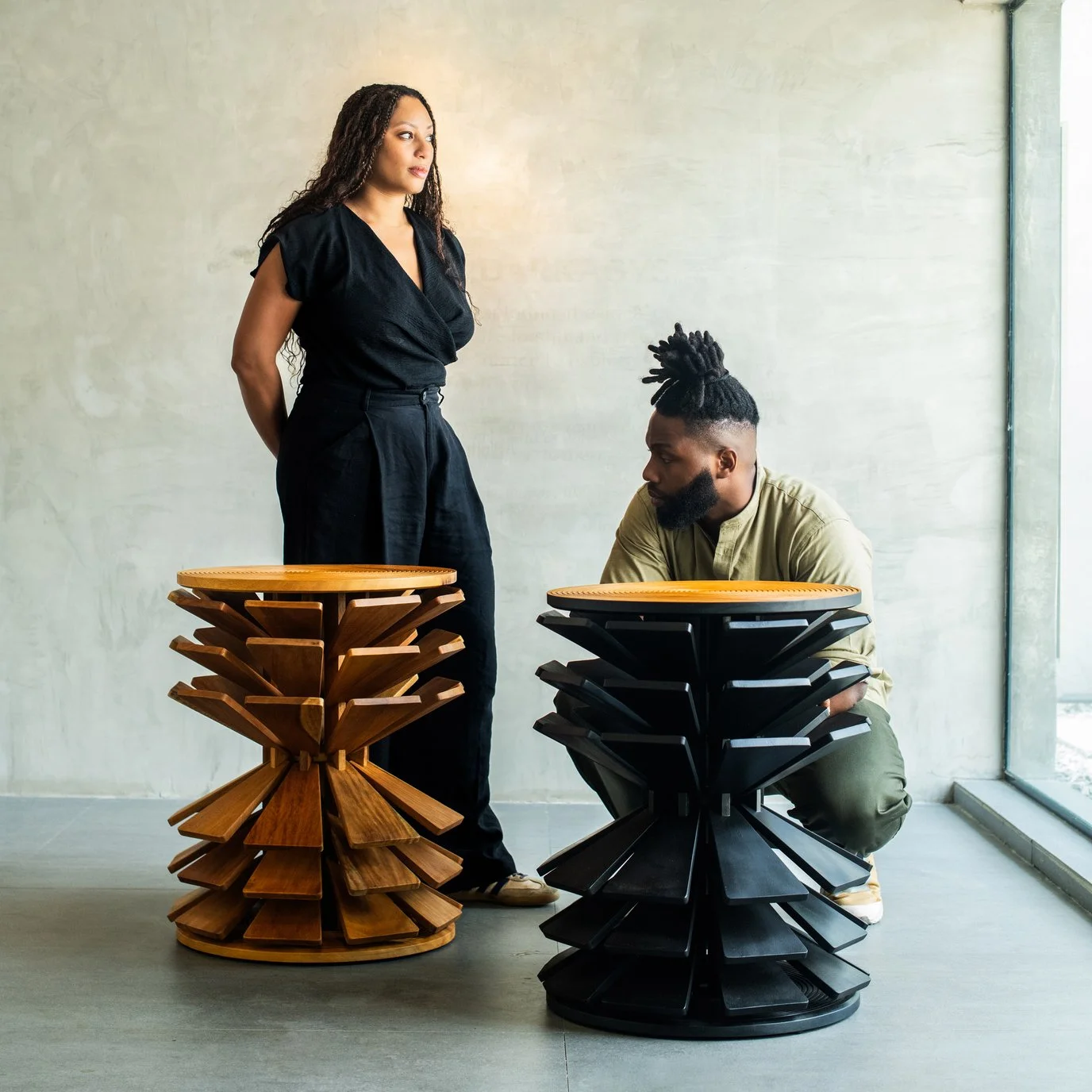
I first came across Salù Iwadi Studio’s work in the early part of 2025 when they participated in the Lyle Gallery x Hello Human group show in New York City. I was immediately intrigued, not only by their beautiful pieces but also by the stories and inspiration behind their work. Architect & designer Toluwalase Rufai and creative strategist & curator Sandia Nassila founded the studio in 2023 on the belief that design is a powerful medium for storytelling and connection.
Last year was a big year for Salù Iwadi: their Zangbeto side table was acquired by the Denver Art Museum, and they were named as one of Wallpaper Magazine’s future icons and Dwell Magazine’s best emerging designers. I do not doubt that we'll hear a lot more from this duo in the future as they use their West African heritage to propel African Design into the future.
WHERE ARE YOUR ROOTS? Toluwalase is Nigerian—he grew up in Lagos and later studied and worked in the United States. Sandia is of Malagasy and Comorian heritage, born and raised between France and Senegal. Together, our backgrounds span West Africa, the Indian Ocean, Europe, and the African diaspora, forming the cultural foundation of Salù Iwadi Studio.
TELL US ABOUT WHERE YOU CURRENTLY LIVE? Tolu is based in Lagos, Nigeria and Sandia is based in Dakar, Senegal.
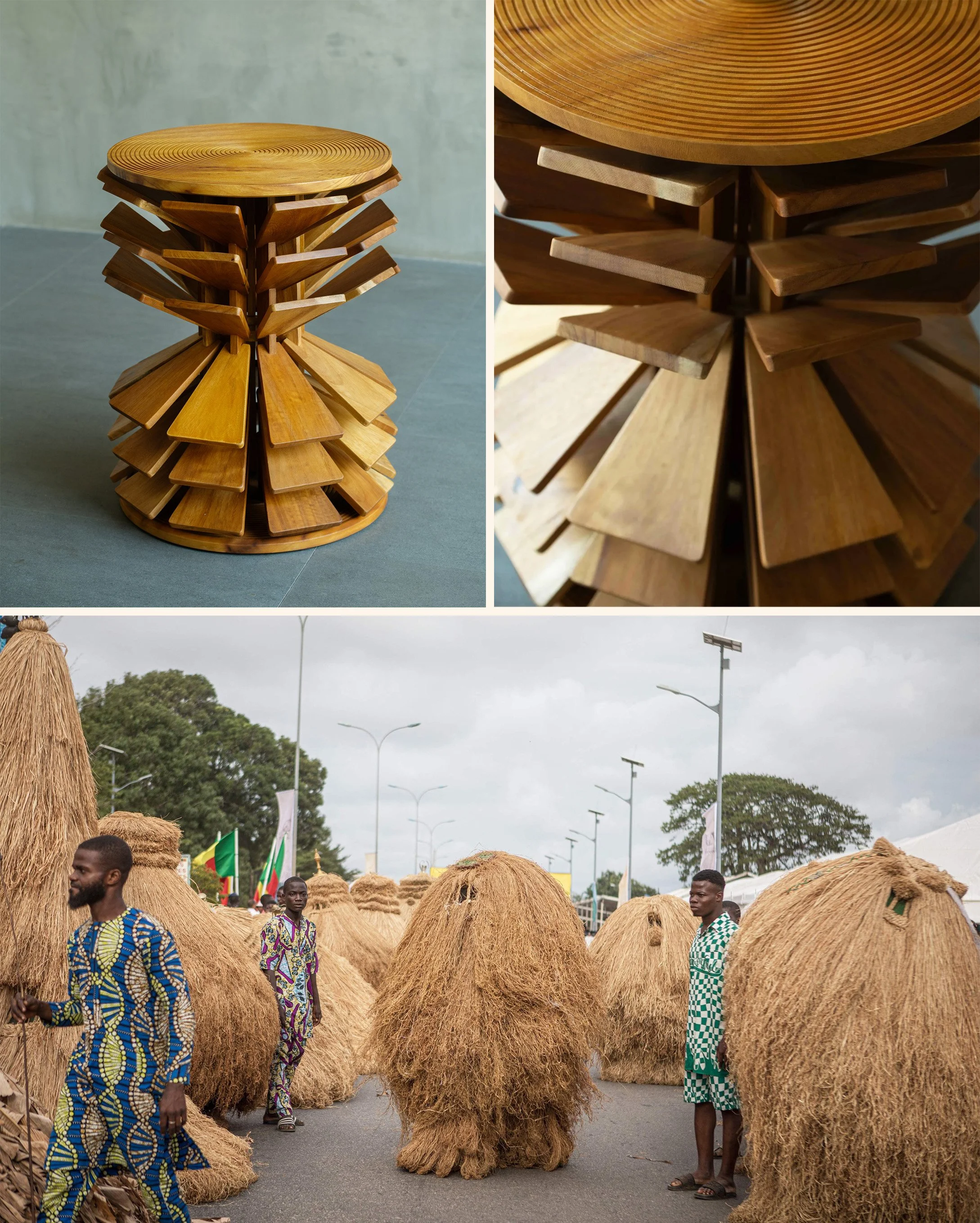
This wooden side table is an exploration of Benin's Zangbeto masquerade, a vibrant and deeply symbolic tradition representing guardianship, spiritual protection, and communal unity. The overall structure of the table is inspired by the iconic conical shape of the Zangbeto costumes, which are crafted from layers of cascading raffia.
DESCRIBE WHAT YOU MAKE AND WHAT YOU’RE PASSIONATE ABOUT. At Salù Iwadi Studio, we create collectible design objects, spatial environments, and installations that sit at the intersection of cultural memory, craftsmanship, and contemporary expression. Our studio is dedicated to uncovering and celebrating the rich heritage of the African diaspora, and we believe design is a powerful medium for storytelling, connection, and reflection. We are passionate about bridging past, present, and future through thoughtful design. This means blending modern innovation with historical methodologies, studying traditional craft, indigenous materials, and cultural practices, and reimagining them in ways that feel relevant and resonant today.
The name “Iwadi” means to investigate or probe deeply in Yoruba—this is a principle that guides everything we do at the studio. At the heart of what we do is a passion for research, material exploration, and cultural dialogue. Whether through objects that evoke ancestral rituals or installations that provoke collective reflection inspired by our immediate surroundings, our work seeks to honor heritage while imagining new futures connecting communities locally and globally.
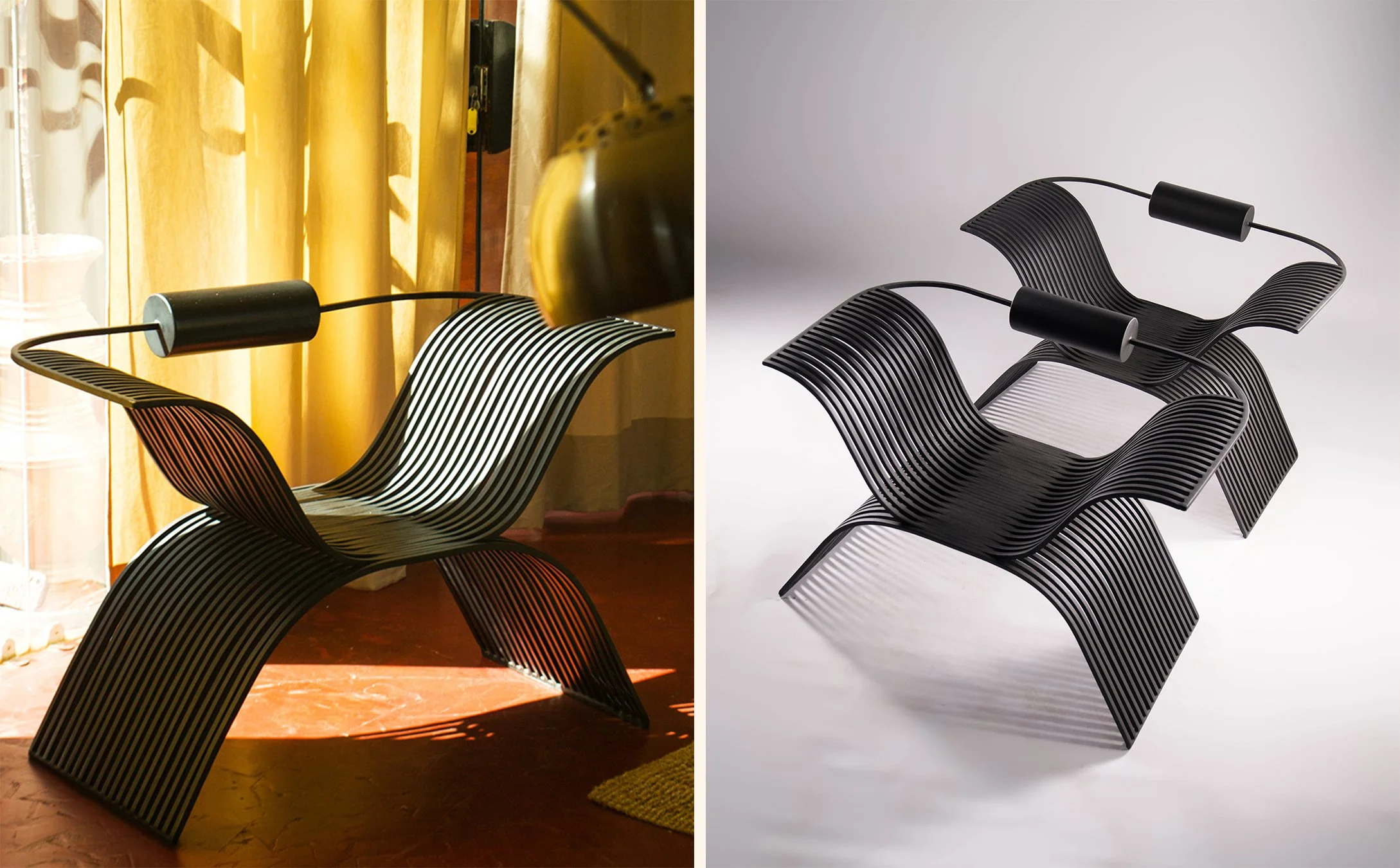
A striking fusion of contemporary design and traditional African craftsmanship, this chair is inspired by the intricate beauty of the iconic Patewo hairstyle. Mimicking the gesture of interlocking hands clapping, the Patewo hairstyle was named after the Yoruba word for applause.
HOW DOES PLACE INFORM WHAT YOU DO? Place and context are central to how we think, design, and make. Working between Lagos and Dakar situates our practice within environments where tradition and contemporaneity coexist daily. These contexts inform not only the forms we create, but also the questions we ask around ritual, function, resourcefulness, and meaning. Our work responds to the social, cultural, and material realities of each place, while our diasporic perspective allows us to translate these local contexts into narratives that can be understood and felt globally. Place, for us, is both a source and a framework; it shapes how our work is rooted, positioned, and received.
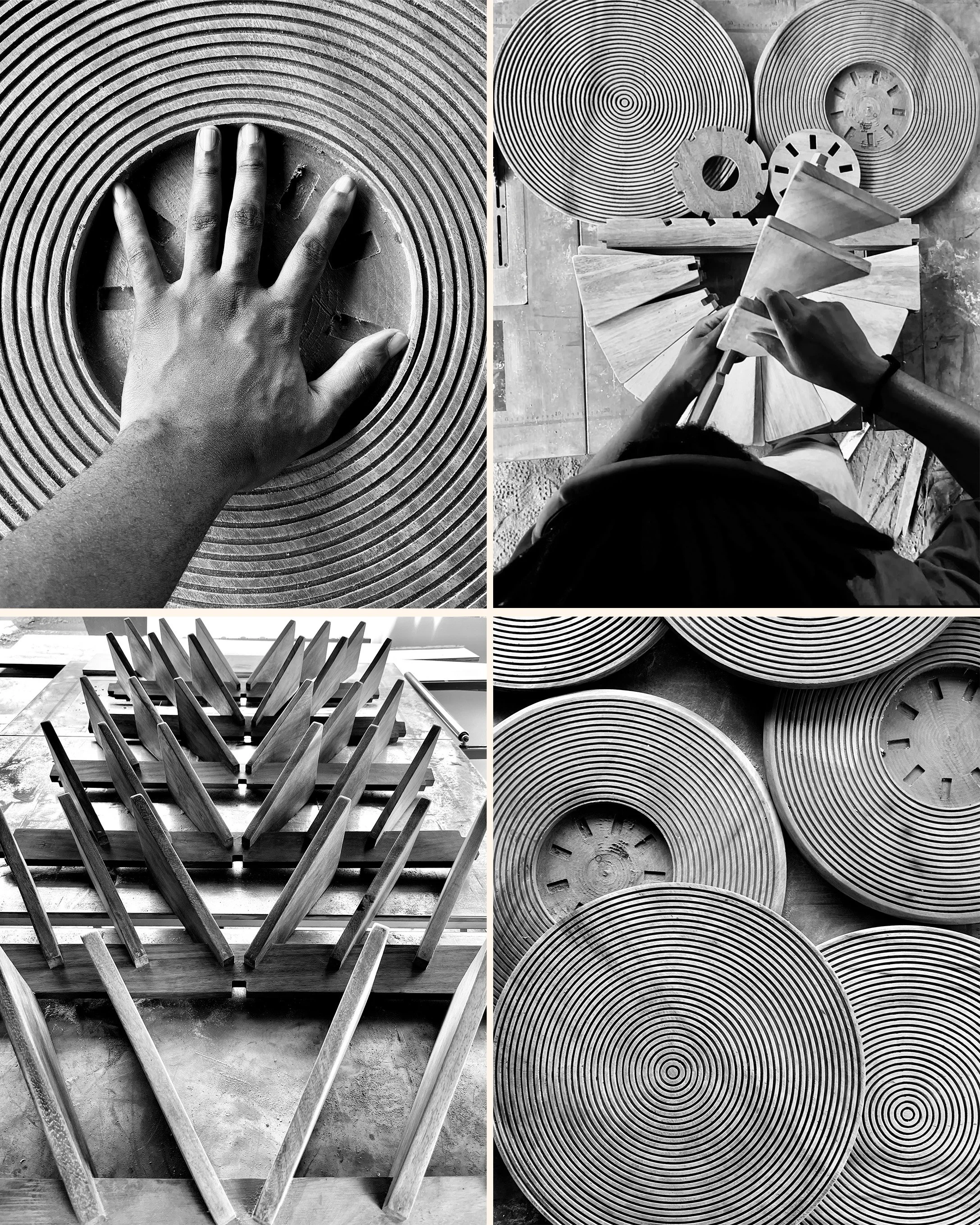
The process of making the Zangbeto Side Tables.
WHAT ARE YOUR THOUGHTS ON AFRICAN DESIGN? For us, African design is something lived before it is defined. It comes from everyday gestures, rituals, and ways of making that are deeply connected to place, community, and belief. Growing up between different cultures has made us sensitive to how African design is often simplified or reduced to aesthetics, when it carries complex systems of knowledge, function, and spirituality. What excites us today is seeing designers from the continent and the diaspora confidently shaping their own narratives, drawing from heritage while imagining new futures. We see African design as layered, evolving, and deeply human, not something to be explained, but something to be experienced.
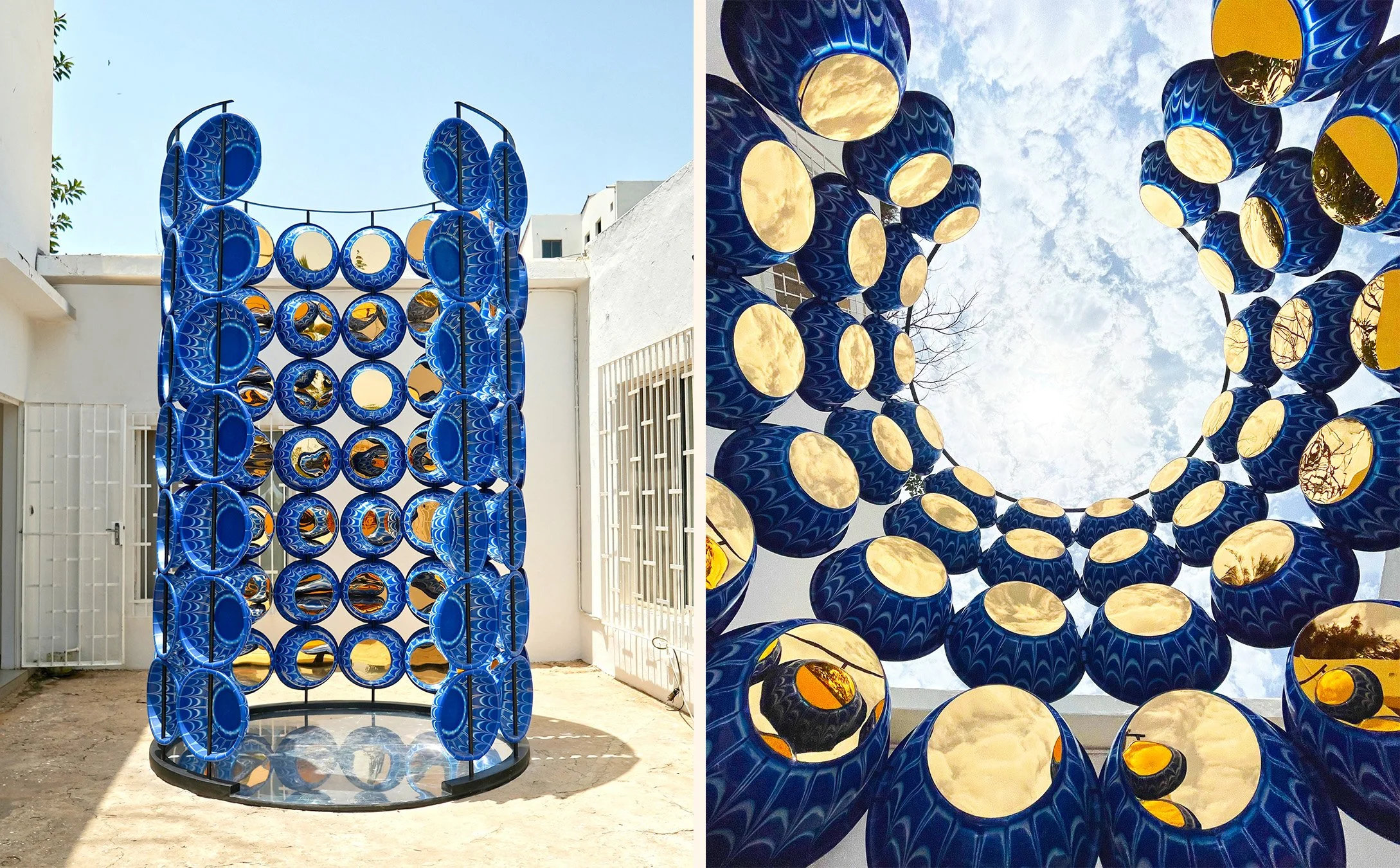
The Water Basin Totem aims to highlight the use of recycled materials in the built environment to raise awareness about pressing water issues in Africa. Water basins hold significant symbolism in West African households due to their versatility, affordability, and practicality in addressing water-related challenges.
DO YOU HAVE A FAVORITE PART OF YOUR PROCESS? Travel and research are central to our process. Depending on the materials we want to work with, we intentionally travel to places where those traditions are rooted, spending time understanding the history, landscapes, and cultural contexts that shaped them. A key part of this is engaging directly with local artisans, learning from their techniques and knowledge. For instance, exploring bronze casting traditions in Grand-Bassam or, more recently, visiting Morocco to immerse ourselves in local crafts, soils, and stories has been incredibly inspiring. These moments of exchange deeply inform our work, grounding each piece in lived experience rather than abstraction.
TELL US ABOUT A LOCAL UNSUNG HERO. For us, local artisans are the true unsung heroes. Many work in very rudimentary conditions, with limited resources, yet create extraordinary things through their hands. They carry generations of knowledge, history, and intuition, often without formal recognition. Working with them constantly reminds us that craft is not just a skill, but a form of power and memory. They are living books, holding stories, techniques, and ways of seeing the world that cannot be replaced and must be celebrated.
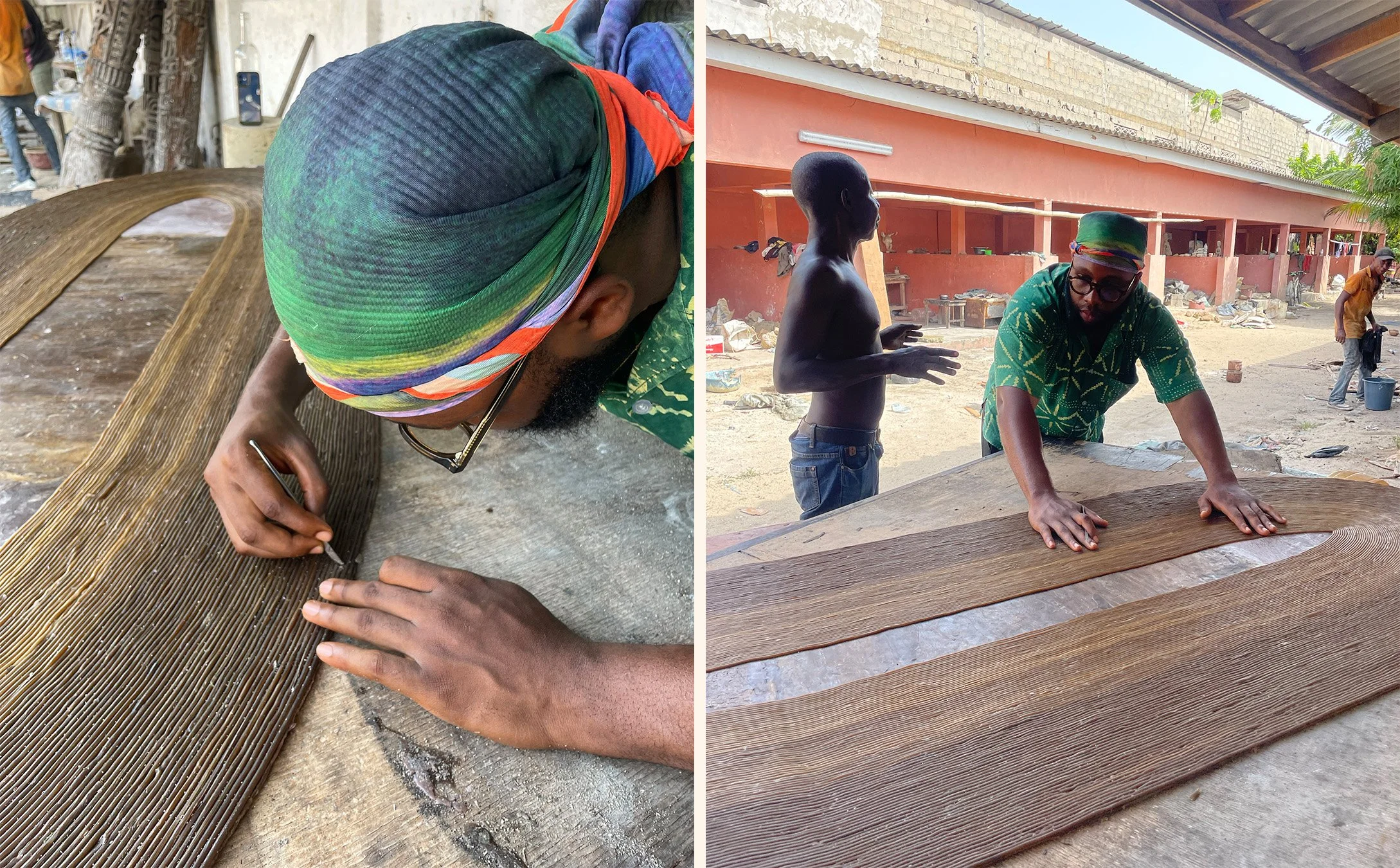
Behind the scenes from a research trip exploring the bronze casting traditions in Grand-Bassam, Côte d'Ivoire.
WHAT ARE YOU EXCITED ABOUT FOR THE FUTURE? We’re excited about the possibility of deepening our practice, taking more time for research, experimentation, and meaningful collaboration. Professionally, we’re looking forward to expanding into larger-scale installations and public commissions and continuing to work with institutions that value cultural depth. Above all, we’re excited to keep telling stories through design that feel honest, rooted, and open to the future.
Written by Hanneke Lourens, a California-based furniture designer inspired by her South African roots. Hanneke crafts made-to-order collections and custom work by hand at her studio on the Northern California Coast.
See more of her inspiration and process on Instagram.